Decent Homes Standard 2035: What Compliance Will Mean for the Private Rented Sector
The confirmation of an enforcement date for the Decent Homes Standard 2035 marks a significant milestone for the private rented sector (PRS). Following extended consultation and sector-wide engagement, the UK Government has set out clearer expectations on compliance, exemptions, and enforcement, providing landlords and managing agents with greater certainty on what lies ahead.
While higher housing standards are broadly supported, the success of the Decent Homes Standard 2035 will depend on clear guidance, proportionate enforcement, and a framework that recognises the practical realities of managing rented homes.
A More Realistic Timetable for Compliance
The confirmation of 2035 as the enforcement date gives the sector additional time to prepare for the Decent Homes Standard 2035. Although some within the industry had called for a later deadline, the extended timeframe is widely seen as a positive step, particularly when combined with a move away from rigid, box-ticking requirements.
Importantly, the Government has confirmed that age-based replacement rules for kitchens and bathrooms will not form part of the standard. This shift recognises that condition, not age alone, should determine whether components are fit for purpose.
Proportionate Standards, Not One-Size-Fits-All
A key strength of the updated approach to the Decent Homes Standard 2035 is its recognition that not all properties can be treated the same. Requirements relating to enhanced security measures and floor coverings have been scaled back, reflecting the fact that much of the PRS already meets acceptable standards in these areas.
Crucially, the Government has confirmed a number of exemptions that acknowledge real-world constraints. These include situations where tenants refuse access, where Minimum Energy Efficiency Standards (MEES) exemptions apply, or where physical or planning limitations prevent works from being carried out.
What the Decent Homes Standard 2035 Will Require
To be considered compliant, a property will need to meet five core criteria:
- Safety – Homes must be free from Category 1 hazards under the Housing Health and Safety Rating System (HHSRS).
- State of Repair – Properties must be maintained in a reasonable condition.
- Facilities and Window Safety – Core facilities must be present, with window restrictors required where a fall risk exists.
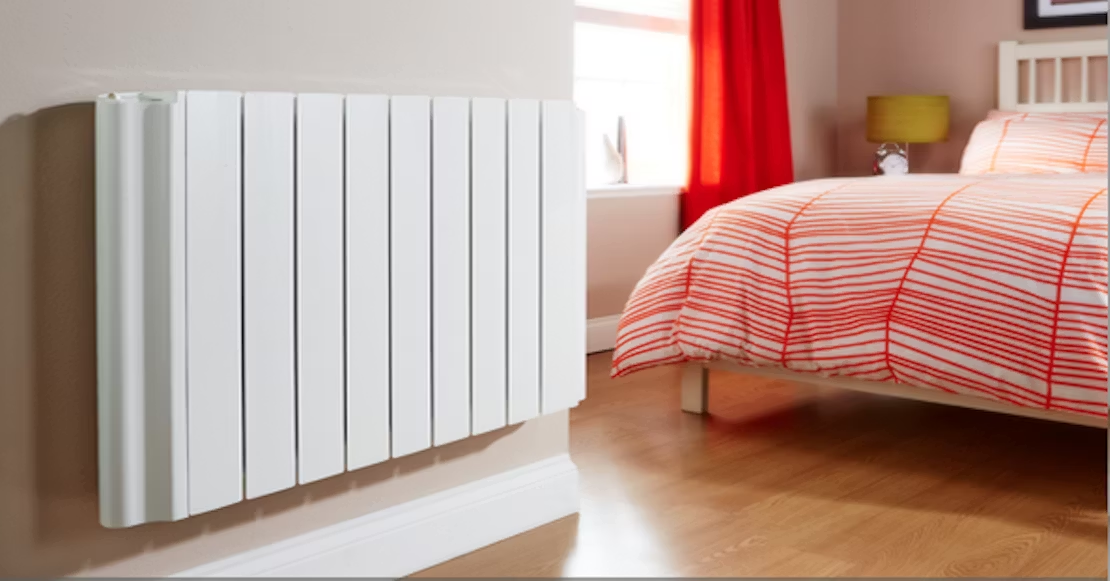
- Heating and Energy Efficiency – Thermal comfort standards will align with existing energy efficiency obligations.
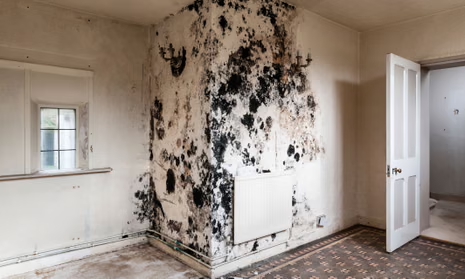
- Damp and Mould – Landlords must take proactive steps to prevent and address damp and mould.
The emphasis on damp and mould reflects a wider shift in housing regulation towards early intervention, rather than reactive responses to complaints.
Energy Efficiency and Thermal Comfort
Energy efficiency plays a central role in the Decent Homes Standard 2035. With UK homes among the least energy efficient in Europe, improving thermal performance is seen as essential not only for tenant wellbeing but also for meeting wider environmental targets.
By linking thermal comfort to existing MEES requirements, the standard aims to align housing quality improvements with the broader drive to reduce emissions and energy use across the housing stock.
Damp and Mould: Clearer Expectations
The updated standard reinforces the expectation that damp and mould must be addressed promptly and proactively. This aligns with the wider policy direction following high-profile cases and reflects the planned extension of time-bound repair principles, similar to those set out under Awaab’s Law, into the PRS.
For landlords and agents, this underlines the importance of clear reporting processes, good record-keeping, and timely remedial action, particularly where access or supply chain issues may affect delivery.
Enforcement Powers and Penalties
Local authorities will be responsible for enforcing the Decent Homes Standard 2035. Councils will have powers to inspect properties, require improvements, and take formal enforcement action where standards are not met.
Where serious hazards are identified under the safety criterion, councils will have a duty to act and may issue immediate financial penalties. Civil penalties of up to £7,000 and £40,000 for more serious breaches have been confirmed, alongside the potential for criminal prosecution in cases of continued or serious non-compliance.
These powers reinforce the importance of compliance planning, clear internal processes, and prompt action when issues are identified.
Preparing for 2035
The Decent Homes Standard 2035 represents a significant but manageable shift for the PRS. With clearer exemptions, a more flexible approach to compliance, and a realistic implementation period, the focus now turns to producing detailed, consistent guidance that can be applied uniformly across all local authorities.
For landlords and managing agents, early preparation, robust property data, and proactive maintenance strategies will be key to meeting the standard while continuing to provide safe, sustainable homes for tenants.
Expert Property Management Across Wales
Let Property Management Wales handle your landlord obligations — compliance, tenant management, rent collection and more.